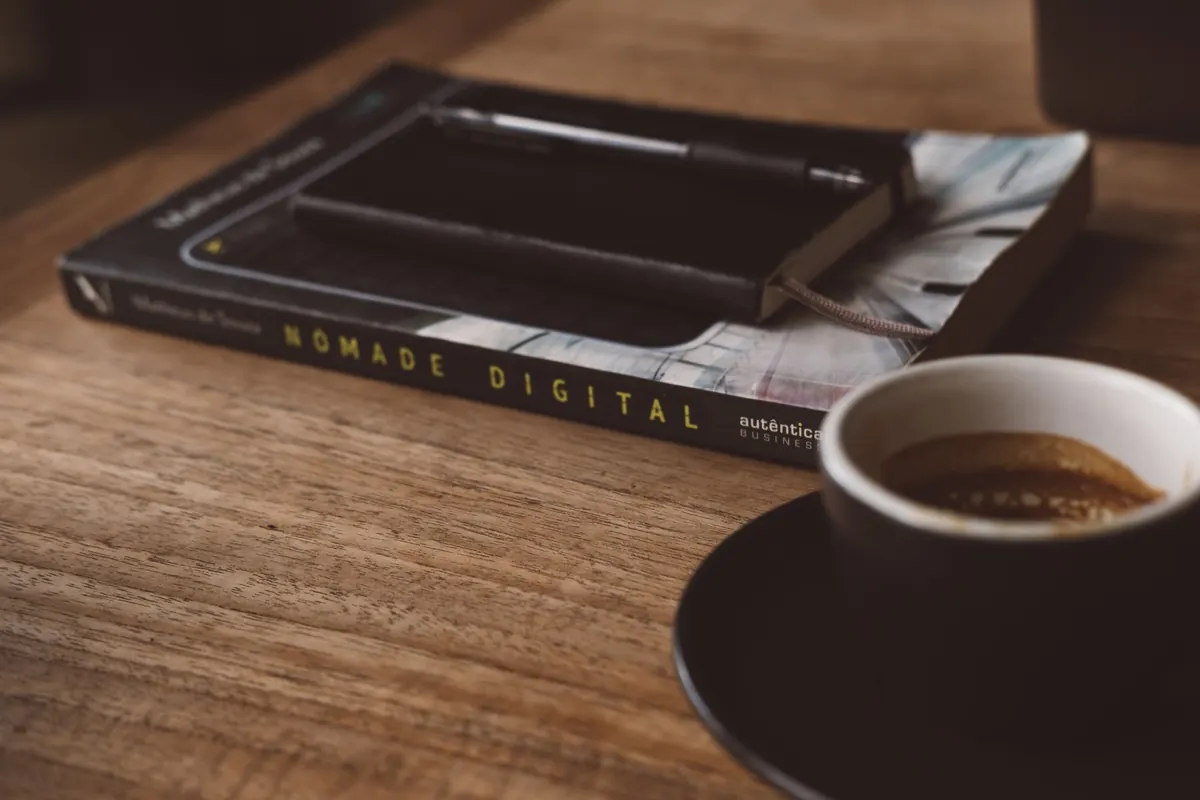
A taccuino is not a diary, and getting that straight is most of the battle. It is a small notebook, roughly the size of your palm, soft-covered, a few dozen pages, that lives in a coat pocket and gets bent at the corners. You do not write your life in it. You write what you noticed: a chalkboard, a sentence overheard at the counter, the wobble in a café table, the way the light moved across a shop window at four in the afternoon. The point is not confession. The point is catching the day before it goes quiet.
You do not need to be in Italy to keep one. The habit travels fine. What it needs is a pocket, a pen, and about four minutes a day — which is the part that has to be negotiated with a week already full of meetings, school runs and train timetables.
A journal asks for reflection. A taccuino asks for attention. That difference changes everything about how you use it: no obligation to write at night, no narrative arc, no guilt about the days you skip. You are not building a record of your feelings. You are collecting evidence.
The tradition it comes from is unglamorous. Small notebooks are sold in stationers next to pencils and erasers, the kind of thing a shopkeeper keeps by the till to note an order or a delivery. They are working objects. They get rained on. A page is torn out and used as a shopping list. That is the spirit worth copying, because a notebook that must stay beautiful stays empty.
Size matters more than paper quality. Look for something around A6 — a hand's width — with 48 to 96 pages, a soft cover, and a binding that opens flat enough to write in while standing up. Ruled, plain or dotted is a personal matter; the lines should not be so narrow that your handwriting has to shrink to fit.
Avoid the handsome hardback with the ribbon marker. It is too heavy to carry, too expensive to ruin, and it will stay on the shelf. The right notebook is the one you forget you are carrying until you need it.
Then settle the pen question once. One pen, reliable, cheap enough to lose, clipped to the cover or living in the same pocket as the book. If the ink smudges when your hands are cold or damp, you will stop writing in the rain, and the rain is often the best part. Keep a spare notebook at home so you never ration pages to make the book last.
You will not find an hour. You will find gaps: the kettle boiling, the bus that is four minutes late, the queue at the coffee counter, the minute before a call starts when everyone is still muted. Those gaps are the whole method.
Attach the notebook to a trigger so you do not have to decide. The coffee arrives, the book comes out. You sit down on the train, the book comes out. One line counts as a full entry. A date and a single sentence counts. Nothing needs to be worth writing — the flat, ordinary detail you almost skipped is usually the one that reads best six months later.
The material is local and free. You are not looking for spectacle; you are looking for specificity — the thing that could only have happened on that street, on that morning.
Order the same thing twice and watch what changes. Note the chalkboard that still advertises soup from a season ago, the regular who orders without speaking, the tip jar with a handwritten label, the table that needs a folded sugar packet under one leg. One detail per visit is plenty. You are not reviewing the coffee.
Copy things exactly: a hand-written card in a launderette, opening hours that are plainly wrong, a display of umbrellas rearranged because the sun came out, the barber's empty chair at ten in the morning. Public noticeboards are a genre of literature. Read three cards and write down the strangest phrase on each.
One sentence, verbatim, in quotation marks, no commentary. Keep it short. Regional words are worth more than anything you could invent — the local name for a bread roll, a shortcut, a puddle. Note also what you almost said and didn't. That is a different kind of overhearing, and it is often the most useful page in the book.
Here is what ninety seconds looks like on paper.
Tues 14. Rain, then not. Corner café, 8.40. Woman in the window seat: "the usual, but with the good bread." Board still says SOUP OF THE DAY: LEEK AND POTATO. Table three wobbles. Man at the back reading the racing page with a pen behind his ear.
Notice what is missing: summary, opinion, a tidy ending. What is present is a date, a place, a time, one line of speech, and three physical details. Anyone could have written it. That is the test — the entry should be too ordinary to be interesting and too exact to be invented.
Nothing happening is not a problem. It is a prompt. Keep a short list at the back of the book and work through it when the page is blank and the coffee is going cold.
Do not backfill. If you miss three days, leave three days blank and date the next entry. The gaps are part of the record and they cost you nothing.
Number the pages, or at least date every entry in the margin, and keep a rough index at the back — three or four words per entry. After a month you will have a map of your own attention: which cafés you actually like, which streets you walk when you are thinking, how often you write about weather. Once a week, flip back through with a coffee and circle one line. Ten minutes, no more.
Two rules keep the book alive. Never tear a page out; cross things out and keep going. And do not copy entries into a larger, better book unless you genuinely enjoy the copying, because transcription is where most notebooks quietly die. Keep the pen with the notebook, always. A pocket book without a pen is a coaster.
Seven small assignments. None takes longer than a coffee.
By Sunday evening you will have a book with a bent corner, a coffee ring and about forty lines of your own street in it. It will look used. That is exactly the point.
Photo: Matheus de Souza / Pexels

Paper journals win on focus and feel; digital journals win on search and backup. Here is how to choose, or combine...

A commonplace book gathers quotes, ideas, and references into one place, organised by subject rather than by date....
A shorter, later-in-the-day version of morning pages for people whose brains do not come online at dawn — ten...

A free notebook for thoughts and ideas.
