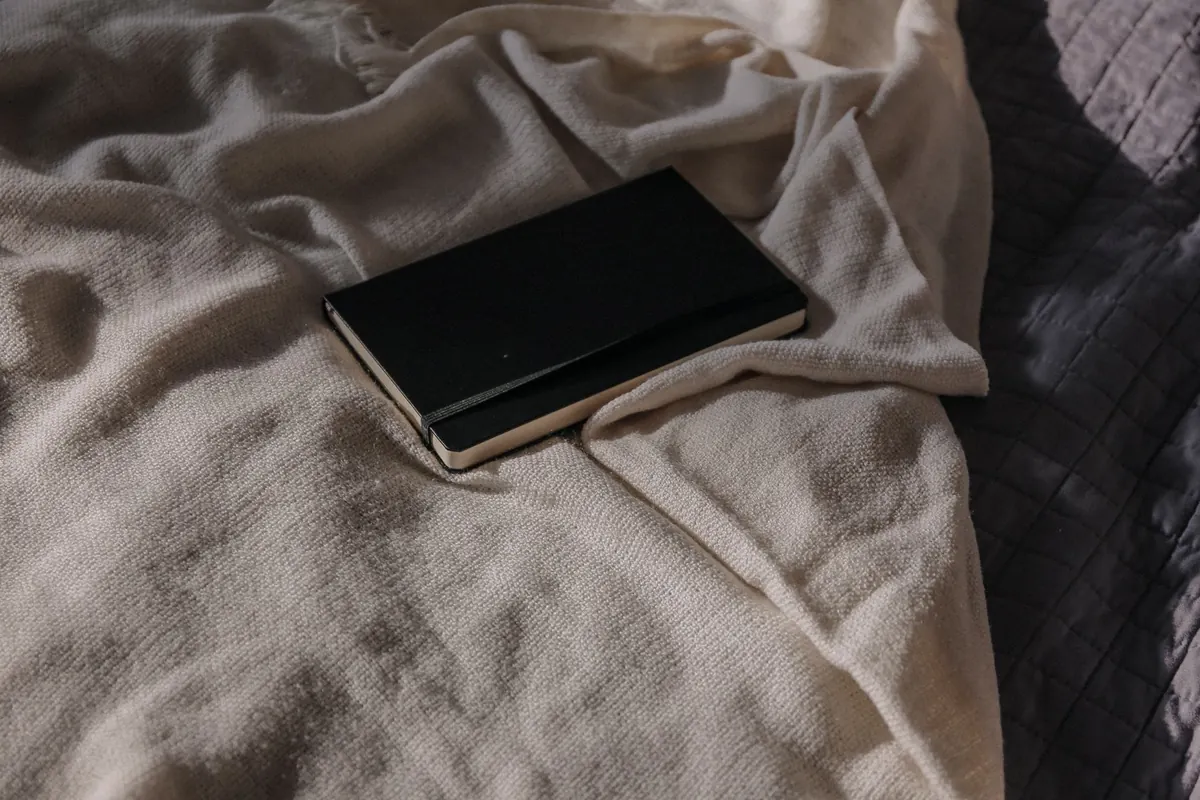
Morning pages have a reputation problem. The practice — three longhand pages, written first thing, before coffee or conversation — gets described as the most reliable creative habit there is, and for some people it probably is. For the rest of us, the instruction to wake up earlier and write by hand lands as a small insult. You already know you are not going to set an alarm forty minutes early to fill three pages with complaints about your inbox. So you skip it, feel vaguely guilty, and get on with the day. There is a version that fits a different kind of person.
The rule of three pages is doing most of the heavy lifting in the original practice, and it was designed for a specific kind of life: one where the first hour of the day belongs to you. Julia Cameron's version, set out in The Artist's Way, asks for three longhand pages before anything else. That is roughly 750 words, and it takes most people somewhere between twenty and forty minutes.
There is nothing wrong with that. But it quietly assumes three things that are not universally true — that you wake up with usable attention, that nobody needs you at 6:40 in the morning, and that writing before you have spoken to another human being will produce something other than a page of fog. If you are a night person, a parent of small children, a shift worker, or simply someone whose brain comes online around eleven, the practice excludes you without meaning to.
The result is a familiar pattern. You try it for four days. On the fifth you oversleep. By the second week the notebook is under a stack of unopened mail and you have concluded that journaling is not for you, when in fact the schedule was not for you.
Strip the practice down to its purpose and the timing becomes negotiable. The point of writing by hand first thing is to clear the pipes: to move the looping thoughts, the small anxieties, and the mental to-do list out of your head and onto paper before you ask that head to be creative. Nothing about that clearing requires dawn, and nothing requires three pages.
So: ten minutes, later in the day, in one sitting, with no page count. You write at whatever hour you actually become a person — 10 a.m. after the school run, at lunch with the door closed, at 4 p.m. when you need to switch out of work mode. Ten minutes is short enough that you cannot talk yourself out of it, and long enough to get past the first three sentences, which are usually just static.
Call it a clearing session rather than a morning ritual if that helps. Names matter more than we like to admit. The moment it is labelled morning pages, a non-morning person has already failed at it.
That is the whole method. No prompts, no gratitude list, no review at the end. Ten minutes of unedited, unshared, unpolished writing, and then you close the book.
Keep it almost insultingly simple, because every piece of equipment is a place to hide.
If you work at a desk, keep a separate notebook for this. Work notes and clearing notes do not mix well; the work pile will always win.
Blankness is usually not a creativity problem. It is a signal that you are trying to write something good. Lower the bar until it is on the floor. A few openers that work on stubborn days:
You do not have to answer the prompt. You only have to start writing and let the sentence go wherever it wants. Half the value is in noticing what you reach for when nobody is grading you.
Do not reread for at least a week. Reading back immediately turns writing into editing, and editing in front of yourself is what kills the habit. Leave the pages alone. When you do go back, skim for one line that still feels true and ignore the rest.
Do not solve anything. This is not a planning session. If a task appears on the page, write it down and move on; you can deal with it afterwards.
Skip a day, not a week. Missing Tuesday is nothing. Deciding on Thursday that the whole thing is pointless because you missed Tuesday is the actual risk.
Keep it unshared. The moment you imagine a reader, you start performing. This page has no audience, including future you.
Pick the hour you already feel most like yourself, and put ten minutes of writing there for a week. Skip the alarm. Skip the three pages. If you genuinely cannot find ten minutes, take five and call it done — showing up matters more than the length.
At the end of the week, ask two questions. Did anything get quieter in my head? Did anything I wrote surprise me? If yes to either, keep going. If the answer to both is no, try a different time of day before you decide the practice is not for you, because the schedule is usually the thing that was broken, not you.
Photo: Valeria Palesska / Pexels

Paper journals win on focus and feel; digital journals win on search and backup. Here is how to choose, or combine...

A commonplace book gathers quotes, ideas, and references into one place, organised by subject rather than by date....
Scattered notes don’t have to stay scattered. This guide shows how to gather fragments, find the week’s center, and...

A free notebook for thoughts and ideas.
