Buying a first journal should take four minutes. In practice it takes forty, because the shelf offers a softcover with cream paper, a hardback with a ribbon, a pocket notebook with graph pages, and a very serious-looking volume that costs more than lunch. All of them could work. The trouble is that the wrong one stops you writing, usually somewhere around page nine.
This checklist exists to shorten the decision. Fifteen points, grouped by the things that genuinely change how a notebook behaves in your hands: paper, size, binding, layout, and how it travels. You do not need to score every one. Read them, handle two or three candidates, and buy the one that clears the points you care about. A first journal is a working tool, not a promise you make to yourself, and it is allowed to be imperfect.
Start With the Paper
Paper is the only element you cannot change later. Covers can be protected, awkward pages can be skipped, but if the ink from your pen shows through, every spread becomes a decision about which side to use. Spend most of your attention here.
- 1. Check the weight. Paper is measured in grams per square metre (gsm). Anything around 70 gsm feels thin and lets ink show through; 80 to 90 gsm is a sensible baseline for ballpoint, gel pen and pencil; 100 gsm and above handles fountain pens and wetter markers far better. Heavier is not automatically better, though. A 200-page notebook in heavy stock becomes a brick you stop carrying.
- 2. Test for bleed and ghosting. Ghosting is a faint shadow of your writing on the reverse side, which is tolerable. Bleeding is ink spreading into the fibres, which is not. If the shop allows it, open a copy and make a small mark in the back corner with the pen you actually use. If it does not, buy the cheapest format in that range, test it at home, and only then commit to a larger one.
- 3. Choose white or cream with your eyes open. Cream paper is warmer and produces less glare under a desk lamp, which many people find easier for long sessions. White gives crisper contrast, which suits fine nibs and grey pencil lines. Neither is correct. But decide now, because switching later feels strangely disruptive.
Find the Right Size
Size is where beginners overthink and then under-decide. The honest answer for most people is A5: roughly 148 by 210 mm, small enough for a tote bag, large enough for twenty-odd lines of handwriting without cramping.
- 4. Pick a default and deviate for a reason. A6 fits a coat pocket and suits notes written standing up. A4 or B5 gives room for mind maps, pasted ticket stubs and long entries. A5 remains the safe middle. If you have no strong preference, start there and let your second notebook correct you.
- 5. Match the page to how much you write in one sitting. A single paragraph a day needs less space than three longhand pages of morning writing. Be honest about which of those is you, not which sounds more impressive.
- 6. Balance page count against bulk. A slim 96-page notebook you finish in two months teaches you more than a 300-page one you abandon in March. Finishing a book is its own reward, and it tells you what to buy next.
Look Hard at the Binding
A journal that will not stay open is a daily irritation, and irritation is what kills the habit. This is the section to test with your hands rather than the description on the label.
- 7. Insist on lay-flat. Sewn signatures and wire-o bindings open flat and stay flat. Glued “perfect” binding is fine for a novel and hostile for writing near the gutter, where the pages curve away from the pen. Open a candidate at the middle page and let go. If it closes on your hand, you will fight it for months.
- 8. Weigh hardcover against softcover. A hardcover survives a bag, protects the pages, and gives you a firm surface to write on when you are balancing the book on your knee. A softcover is lighter and more forgiving in a pocket. Check the hinge on hardbacks, since cheap ones crack within weeks, and the stitching on softcovers.
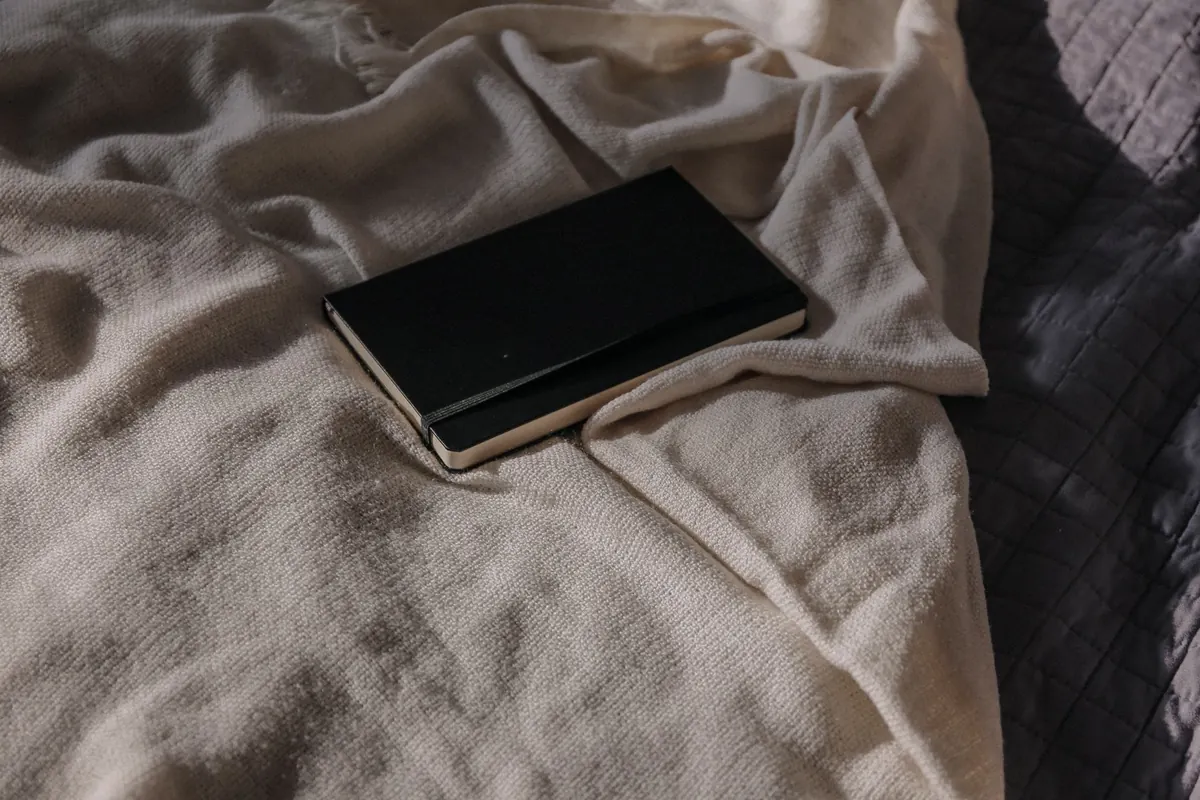
- 9. Treat closures and ribbons as extras, not reasons. An elastic band keeps loose paper and receipts inside, a ribbon marks your place, a back pocket holds things you will forget otherwise. All pleasant. None of them compensate for paper that bleeds. A too-tight elastic will also warp a soft cover over time.
Judge the Layout of the Page
Layout is quietly decisive, because it shapes what you allow yourself to write. A page ruled for prose invites paragraphs; a dotted page invites lists, boxes and diagrams.
- 10. Choose your ruling deliberately. Lined pages suit long entries and keep handwriting level. Dotted pages are the most flexible: you can write, draw boxes, sketch a floor plan. Grid suits lists and diagrams. Blank pages are beautiful and the hardest for a beginner, since lines drift upward, though a sheet of lined paper slipped underneath solves that.
- 11. Check line spacing and margins. Around 6 mm is tight, 7 to 8 mm is comfortable for most adult handwriting. Wide margins give you space for notes alongside your entry but reduce the writing area. Compare using your own pen, not the pen on the shop's display table.
- 12. Look for the boring features. Page numbers, a date field at the top of each page, perforated sheets for lists you want to tear out, an index at the back. For journaling, numbers plus two index pages are worth more than a printed quotation on every spread.
Check Portability and Daily Use
Then there is the test that decides everything: where the notebook goes at seven in the morning and whether it comes back out.
- 13. Try it in the bag you actually carry. Not the bag you intend to carry. If it does not slide in and out easily, it stays on the desk, and a journal on the desk gets written in far less often than one in a coat pocket.
- 14. Test the small mechanics. A pen loop that only fits a slim pen is worse than no loop. A slick cover slides off a café table. A stiff closure catches on the inside of a bag. Open it one-handed and see whether the pages behave.
- 15. Ask whether you can buy it again. Consistency helps: the same paper means your pens behave the same way, and you stop renegotiating the basics every few months. If the model is a limited run, buy two while you can. Availability matters more than brand loyalty.
Before You Pay
Write something on the first page before the notebook becomes precious. Your name, the date, a sentence about why you bought it. If the pen drags, the ink feathers, or the book will not stay open, take it back while returning is still an option.
And resist the expensive one for now. The first journal only has to clear three hurdles: paper that suits your pen, a binding that lies flat, and a size you will carry without thinking. Everything beyond that is taste, and taste is built by filling a few notebooks rather than by choosing the perfect one. Buy something modest, write in it badly, and let the second purchase be the informed one.
Photo: Negative Space / Pexels